Highly targeted ad copy transforms casual browsers into motivated buyers. In today’s advertising landscape—dominated by short attention spans, intense competition, and smart algorithms—a “spray and pray” approach no longer works. Instead, thoughtful, targeted ad copy cuts through the noise and speaks directly to the right people at the right moment.
Whether you’re managing Google, Meta, LinkedIn, or any digital ads, here’s an 800-word, step-by-step blog showing how to create ad copies that convert in 2025.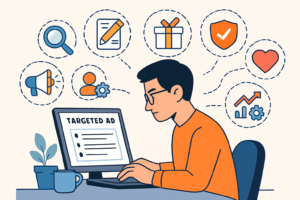
1. Know Your Audience (Deeply!)
Every great ad copy starts with a crystal-clear understanding of your target customer. Go beyond demographics—explore psychological traits, pain points, goals, and triggers. Ask:
-
What problem keeps them up at night?
-
What solution are they actually searching for?
-
What kind of language do they use?
Tip: Create a simple customer persona. Give them a name, a daily routine, and a challenge your product/service solves. Write your ad as though you’re speaking directly to them—not a generic mass.
2. Craft a Compelling, Relevant Headline
Your headline is prime real estate—it’s the first thing users notice. Great headlines are attention-grabbing and instantly relevant to your audience’s intent.
-
Use bold statements, intruiging questions, or urgent offers.
-
Mirror the customer’s query or need: e.g., “Struggling to Sleep? Discover Natural Relief Today.”
Research shows headlines with 10-13 words perform best for engagement, but above all, they must directly speak to the audience’s need.
3. Highlight Benefits, Not Just Features
Customers don’t buy a product—they buy a solution. Instead of “Our software has 128-bit encryption,” try, “Keep your data safe with bank-level security.” Focus on what the feature enables or how it solves the customer’s problem.
-
Benefit-first: “Save time on busy mornings with our ready-to-eat meals.”
-
Transform features into solutions: Know what each feature means for the user, and put that front and center.
4. Write Like You Talk (Be Conversational)
People scroll past stiff, jargon-filled ads. The most effective ad copy feels like a friend offering advice—not a billboard shouting at traffic.
-
Use active voice and short sentences.
-
Speak directly: “You’ll love…” instead of “Customers will love…”
-
Drop technical words unless they’re common for your audience.
5. Personalize Whenever Possible
Generic ads are forgettable. The more your ad feels tailored to the individual—through name, interests, location, or behavior—the higher your chances of engagement.
-
Include details specific to the user’s context or intent.
-
Use dynamic elements (e.g., “Hi, Sarah! Still interested in fitness gear?”)
Modern ad tools and AI can personalize content at scale, but always review for that authentic, human touch.
6. Create Clear, Action-Driven CTAs
Every ad should prompt the user to take a single, clear next step: “Shop Now,” “Get Your Free Guide,” “Book a Demo.” Make your CTA specific, benefit-oriented, and visible.
-
Use action verbs: Get, Discover, Claim, Join, Start.
-
Match your CTA to your offer: “Download your free recipe book now!” instead of just “Click Here.”
Personalized CTAs can perform over 200% better than generic ones.
7. Inspire Trust with Social Proof and Credibility
Before acting, people want to know that others have benefited from your offer. Social proof builds instant trust.
-
Highlight testimonials, star ratings, customer counts, or real user quotes.
-
E.g., “Trusted by 10,000+ entrepreneurs” or “See why Sophia says: ‘This service changed my business!’”
Integrate badges, awards, or endorsements where possible—these visuals and short snippets make social proof pop.
8. Appeal to Emotions and Urgency
People buy based on emotions and justify with logic. Tap into desires, fears, or aspirations. Add urgency to prompt instant action.
-
Emotional triggers: “Finally, relax knowing your kids are safe online.”
-
Urgency: “Only 5 spots left—Reserve Yours Today!”
-
FOMO (Fear of Missing Out): “Don’t miss the sale—ends tonight!”.
9. Test, Tweak, and Optimize
No ad copy is perfect on the first try. Run A/B tests on headlines, messages, and CTAs. Review which variants drive the highest clicks and conversions and evolve your copy accordingly.
-
Use AI-powered tools for quick variations, but always add final human polish.
-
Monitor analytics weekly and adjust for continual improvement.
10. Format for Scannability
Even the best message fails if it’s buried in a block of text.
-
Use short paragraphs, bullet points, and emojis (in select channels) to break up copy.
-
Place your key benefit or promise at the very beginning.
-
Remove deadweight words—every character should earn its spot.
Conclusion
Highly targeted ad copies don’t happen by accident—they’re crafted with intelligence, empathy, and relentless testing. By blending sharp audience insights, personal and benefit-driven language, trust signals, and a touch of emotion, your ads will break through in crowded feeds and drive real results.